Restore
Dental Implants
If you're missing one or more teeth and want to eat your favourite foods, increase chewing ability and improve appearance, speech and self-esteem, you're a candidate for implants.
Existing teeth, bone, jaws and gum tissue are thoroughly examined before implants are recommended. Implants replace the roots of lost teeth and are inserted under the gums; after 3–6 months the bone grows around and adapts to them as if they were natural roots. Once firmly in place with strong surrounding tissue, they're ready to support a crown. When it's finished, the new teeth are often hard to tell apart from the originals.
Bone grafts. If the implant site lacks the bone volume to support the right size of implant, a bone graft is needed. Bone loss can result from periodontal disease, injury, cysts, infection or an extracted tooth. It can usually be determined from an x-ray beforehand, though occasionally it's only discovered on opening the site. Grafts are very safe and effective — replacing missing bone, stimulating bone formation and increasing volume.
Restore
Mini Dental Implants
Smaller in diameter (1.8–3.5mm versus 3.5–6mm), shorter, and built as a single piece rather than a separate post and abutment.
- Minimally invasive — can often be placed and loaded in a single office visit, where traditional implants typically require two surgical procedures
- Less bone required — they don't need as much bone mass for osseointegration
- Immediate load — placed with an overdenture, patients can chew with minimal difficulty and a more normal diet
- More affordable — often a fraction of the cost, with a simpler restorative and prosthetic process
- Suitable for many medically compromised patients who can't tolerate the invasiveness of regular implants
Suitability is always based on clinical evaluation, and clinicians determine immediate loading case by case based on bone quality and quantity, load, and healing ability.
Restore
Crowns & Bridges
A crown (or cap) is a covering that restores a tooth to health and function — used when teeth are damaged by decay, weakened by large old fillings, worn or broken down. Crowns can be porcelain, porcelain fused to metal, or full gold; an examination determines which is best for you.
A bridge is the most common way to replace missing teeth. A false tooth is attached to porcelain crowns made for the natural teeth on either side of the gap, all as one fixed piece — unlike a denture, bridges are not removable. Besides appearance and function, a bridge can help other teeth last longer by reducing the stress placed on them.
Restore
Dentures
Modern dentures are made to look natural, support the facial muscles, and help you chew, eat and speak clearly. They come with real benefits and can greatly improve quality of life.
If you're considering dentures, come in for a complimentary consultation. We'll assess your condition and give you options tailored to your needs. With the advances in implants over the last twenty years, dentures can often be used alongside implants for better function and comfort — though for many people, dentures alone remain a very cost-effective solution to aging teeth and gum disease.
Preserve
Root Canal (Endodontics)
Required when tooth decay has broken through the outer enamel and infected the heart of the tooth.
The goal is to save your natural teeth and avoid extraction — because removing a natural tooth leaves a gap, other teeth compensate, and that can affect your bite and cause a host of related problems.
When a tooth is infected at the centre, the pulp is affected and the nerves at the heart of the tooth are slowly dying — usually with a fair amount of pain. Most patients want the quick fix of an extraction. While that removes the offending tooth, it isn't the best long-term option. We prefer to try root canal treatment first, so the infection can be cleared and the tooth kept in place.
Surgery
Tooth Extraction
Sometimes extraction is necessary — a baby tooth blocking an adult tooth from erupting properly, a root that's too long or a misshapen tooth, or excessive decay putting the jaw bone and surrounding teeth at risk of infection. It may also be recommended because of wisdom teeth or for orthodontic correction.
The procedure is relatively quick, though it requires expanding the tooth socket in the jaw bone to separate the tooth from the ligament holding it in place. If you have concerns, raise them — along with your preference for sedation. Replacing an extracted tooth is often recommended, since neighbouring teeth may shift and complicate chewing and jaw function.
Surgery
Wisdom Tooth Removal
Wisdom teeth are the last to erupt, usually in the late teens or early twenties — the third set of molars, on each side of the upper and lower jaws. They become a problem when impacted, misaligned, causing crowding, or when there simply isn't room for them.
Depending on the complexity of the extraction, three types of anesthesia may be used: local (you're awake), sedation (a state of sleep, though you can still be stimulated by touch or sound), or general (you lose consciousness). Recovery time depends on which is used, and you'll receive a full list of aftercare instructions.
Protect
Mouth Guards & Night Guards
A mouthguard is a soft plastic appliance fitted over the teeth. Properly designed and custom-made, it protects the lips, cheek, tongue and jaws as well as the teeth. The American Dental Association estimates mouthguards prevent 200,000 injuries each year in high-school and college sports alone.
Night guards are designed for people who grind their teeth or clench their jaw while sleeping. Left untreated, grinding and clenching can severely damage your teeth.
Protect
Dental Sealants
A thin coating applied to the fissures and grooves of the back teeth. Plaque and food particles come off smooth tooth surfaces with brushing and flossing, but they're difficult to remove from the depressions and grooves.
The sealant bonds into those grooves and forms a protective shield over the enamel, adding an extra layer of protection.
Treat
Cold Sore Laser Treatment
Unlike creams or ointments, lasers get to the root of the problem — destroying the virus that causes cold sores. Precise laser technology heats the cold sore in a carefully controlled area without ever touching the skin, killing the virus and prompting your body to heal faster. It takes about 15 minutes with no downtime.
If you already have a breakout, treatment significantly speeds healing and gives immediate relief from pain and itching, and the breakout stops spreading. Applied before blisters appear — at the first sign of itching, tingling or pain — it can stop them appearing at all. The virus can't be cured, but treatment extends the time between breakouts, and after several treatments in the same area they may never return.
We do our best to treat cold sores within 24 hours, often the same day you call. Contact us as soon as you feel symptoms.
Standards
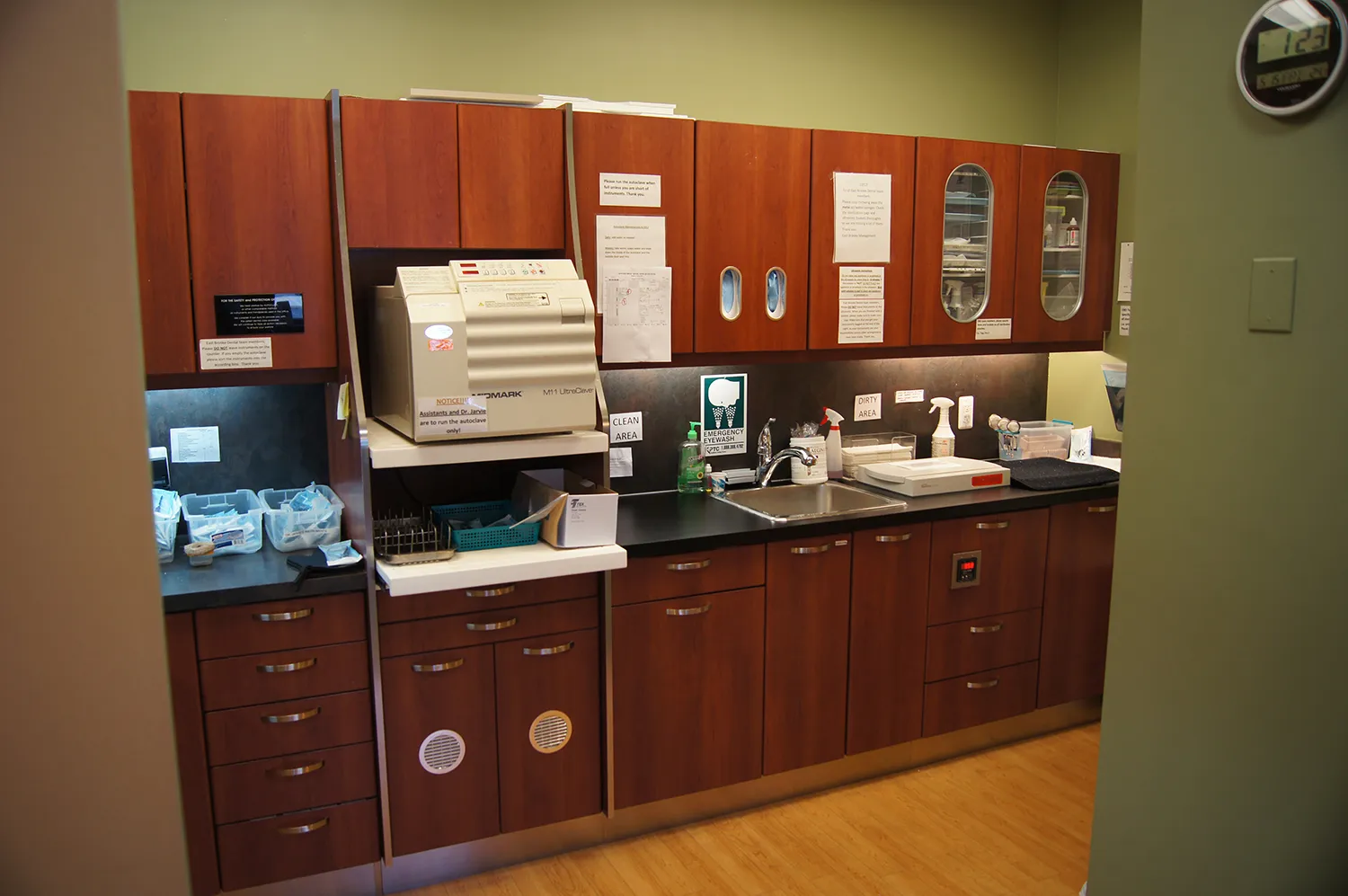
Infection Control
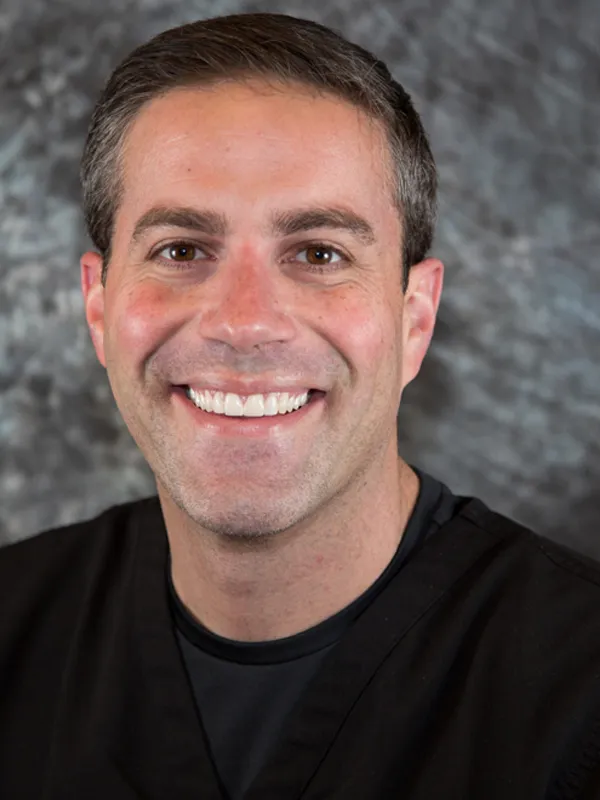
Dr. Jarvie and his team pay strict attention to infection control and follow OSHA guidelines.
- All surfaces contacted by staff and patients are sprayed and wiped with an antibacterial solution before each patient
- Disposable barriers on all handles and points of frequent contact, changed between patients
- Hand-washing stations equipped with hand sanitizers
- Personal protection items are either disposable or changed every day
Access
Flexible Appointment Times
Night and weekend appointments are available to fit a working schedule — Tuesdays until 7pm and Thursdays from 7am to 7pm.
Call one of our patient coordinators and they'll find the best time for you rather than the first slot in the book.